
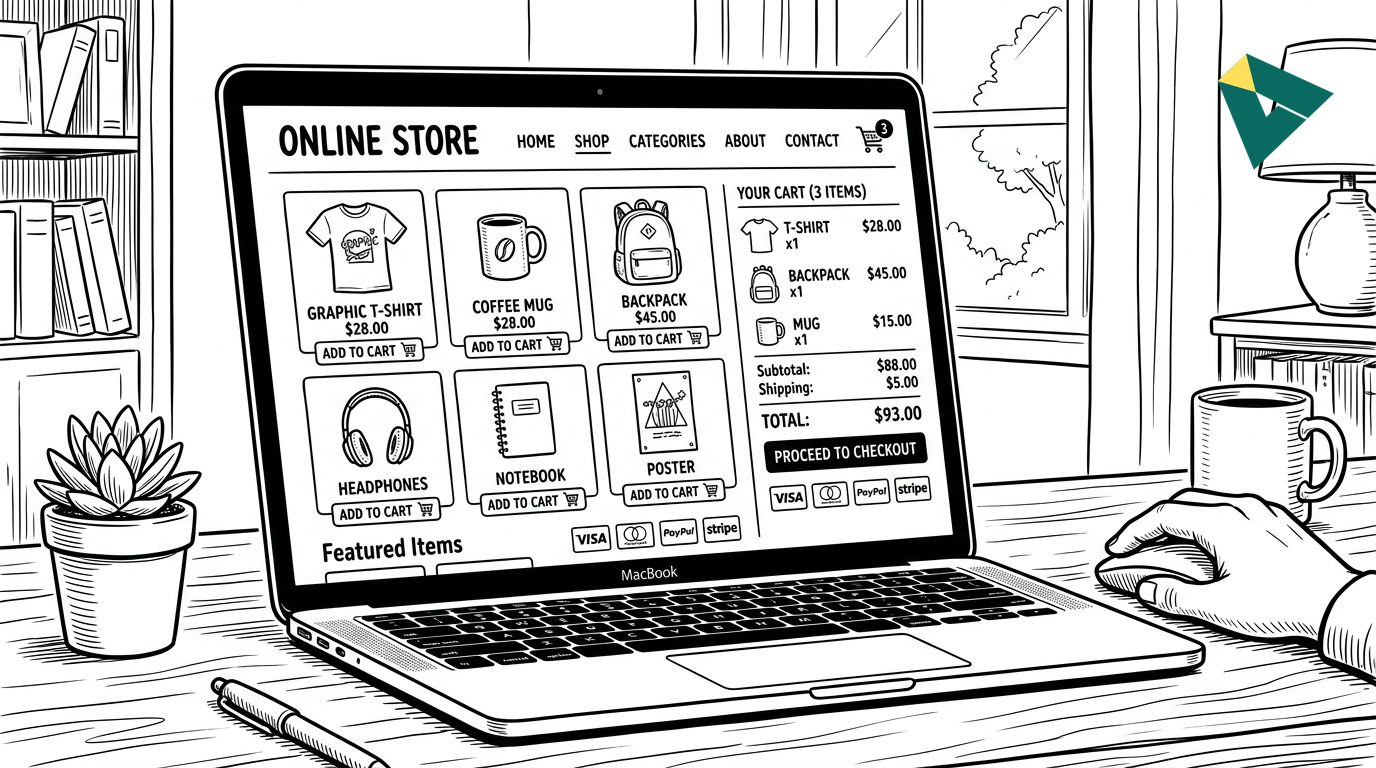
A WooCommerce store built by a professional costs between €2,000 and €8,000 to develop, plus €500–1,900 a year for hosting, plugins and maintenance. The WooCommerce plugin itself is free: what you pay for is the work to set it up properly, the design, the extra features and the upkeep over time. Below you’ll find the costs item by item, three sample budgets and the expenses that only show up after launch.
I’m Toure Tia Kevin, a freelance web developer based in Bassano del Grappa, Italy. I build online stores with WordPress and WooCommerce, like the one for Newmen Academy, which sells a barber academy’s courses online with sign-up and payment.
How much does WooCommerce cost?
WooCommerce is free: it’s an open-source plugin that turns a WordPress site into a store. There’s no monthly fee and no cut of your sales, unlike platforms such as Shopify. The costs come from everything it needs around it.
| Item | Typical cost | When you pay |
|---|---|---|
| Domain name | €10–20 | every year |
| Hosting suited to a store | €100–400 | every year |
| SSL certificate | €0 (included with most hosts) | — |
| Theme | €0–80 | once, or yearly for updates |
| Paid plugins | €0–400 | every year |
| Payment fees | about 1.5–3.5% per order | on every sale |
| Professional development | €2,000–8,000 | once |
| Maintenance and updates | €30–80 a month | every month |
How much does a professional charge to build it?
The development price depends mainly on three things: how many products you sell and their variants (sizes, colours), how custom the design is, and which features you need beyond the cart, such as bookings, subscriptions or a link to your management software.
- €2,000–3,500: a simple catalogue, a polished design on a solid theme, card and PayPal payments, shipping set up, legal pages and basic SEO.
- €3,500–6,000: a design built from scratch, product filters, variants, discount codes, branded emails and several shipping methods.
- €6,000–8,000 and up: custom features, a link to inventory or management software, several languages, and trade sales with dedicated price lists.
An agency often charges more for the same work, because the price covers more people and more steps. I cover this in the guide on freelancer or web agency.
Three sample budgets for the first year
| Small store | Mid-size store | Advanced store | |
|---|---|---|---|
| Products | up to 50 | 50–500 | over 500 or with inventory software |
| Development | €2,000–3,500 | €3,500–6,000 | €6,000–8,000 and up |
| Hosting and domain | €150 | €250 | €400 |
| Plugins | €0–100 | €150–300 | €300–500 |
| Maintenance | €360 | €600 | €960 |
| First-year total | about €2,500–4,100 | about €4,500–7,150 | about €7,660–9,860 and up |
From the second year on, development doesn’t repeat: hosting, plugins and maintenance remain, usually between €500 and €1,900 a year.
Which costs show up after launch?
These are the expenses the cheapest quotes leave out, and they make the difference between a store that sells and one that sits still.
- Payment fees. Stripe and PayPal take a percentage of every order plus a fixed fee. On thin margins they add up: build them into your prices.
- Photos and product pages. A store with good photos and hand-written descriptions sells more. If you don’t have them, that’s hours of work or a photographer to pay.
- Updates. WordPress, WooCommerce and plugins get updates every month. Skipping them exposes the store to security holes and checkout errors.
- Visibility. An online store doesn’t get visitors on its own: it needs SEO, content or advertising.
- Legal requirements. Privacy, cookies, terms of sale and the right of withdrawal are mandatory when selling online in the European Union.
WooCommerce or Shopify: which costs less?
Shopify starts with a monthly plan and adds a fee if you don’t use its own payment system; extra apps almost always come with a subscription. WooCommerce costs more up front, because it has to be set up, but its running costs are lower and the store is yours: you can move it to another host, change it and connect it to any service.
In practice: for a few products and no special needs, Shopify is the quickest way to start. If you want control, custom features or one site that brings together store, blog and company pages, WooCommerce usually pays off in the medium term.
Can you build a WooCommerce store for under €1,000?
Yes, if you build it yourself: domain, hosting and a free theme stay under €300 a year. The real cost becomes your time, and the most common mistakes (a slow checkout, emails landing in spam, wrong shipping costs) are paid for in lost sales. If the store is an important part of your business, have a professional handle at least the setup and security.
How to save without cutting quality
- Start with the essential catalogue and add products and features after launch, once you know what customers ask for.
- Choose hosting built for WooCommerce, not the cheapest plan: a slow checkout costs more than you save.
- Keep paid plugins to the ones that solve a real problem.
- Prepare texts and photos yourself if you can: it’s the part that takes the developer the most time.
How much does a store cost with me?
A WooCommerce store I build costs from €2,000 to €8,000, depending on catalogue, design and features. The quote is free and in writing, with every item listed, and the first call costs nothing. After launch I can look after updates, backups and security with the maintenance and hosting service, from €30 to €80 a month. What it covers and what happens if you skip it is in the guide to website maintenance.
You’ll find what each package includes on the e-commerce website page. If your project is closer to a site without online sales, see how much a website costs instead.
Frequently asked questions
How long does it take to open a WooCommerce store?
Three to eight weeks for most stores. The timing depends mainly on how ready the product photos and texts are.
Can I run the store myself after delivery?
Yes. At handover I show you how to add products, manage orders and create discount codes from the WordPress dashboard.
Is the cost of the store tax-deductible?
For a business, the cost of the website is a business expense. How it’s depreciated, and whether any grants apply, is something to check with your accountant.